Indifference

By: Gabriela Yareliz

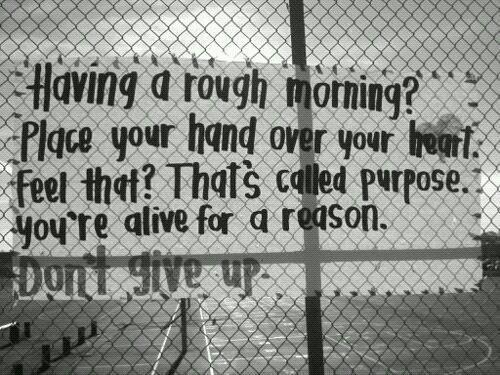
People wonder why there is so much suffering in the world. They ask God to do something about it, and as I read in Dwight K. Nelson’s book, Pursuing the Passion of Jesus, he did do something about it. He made you. He put you here. It is up to us to be God’s hands and feet. This video is so powerful. It is part of the reason I came to law school in the first place. One doesn’t literally have to be an advocate to make a difference, however.

We can all give love. It all starts with extending your hand out to someone who is broken. Our streets are filled with these people. One doesn’t even need to go far.

Will you be an a part of the body, and say “Lord, I will go”?

Food and religion

By: Ellen G. White

An Important Place in Our Salvation—Those who are not health reformers treat themselves unfairly and unwisely. By the indulgence of appetite they do themselves fearful injury. Some may think that the question of diet is not important enough to be included in the question of religion. But such make a great mistake. God’s word declares, “Whether therefore ye eat, or drink, or whatsoever ye do, do all to the glory of God.” The subject of temperance, in all its bearings, has an important place in the working out of our salvation.—Evangelism, 265. – {Te 162.6}
If men and women perseveringly live in accordance with the laws of life and of health, they will realize the blessed results of an entire health reform.—The Signs of the Times, January 6, 1876. – {Te 163.1}

Margaret Atwood: Part II

“I’m not used to girls, or familiar with their customs. I feel awkward around them, I don’t know what to say. I know the unspoken rules of boys, but with girls I sense that I am always on the verge of some unforeseen, calamitous blunder.”-Margaret Atwood, Cat’s Eye

“Why is it we want so badly to memorialize ourselves? Even while we’re still alive. We wish to assert out existence, like dogs peeing on fire hydrants. We put on display our framed photographs, our parchment diplomas, our silver-plated cups; we monogram our linen, we carve our names on trees, we scrawl them on washroom walls. It’s all the same impulse. What do we hope from it? Applause, envy, respect? Or simply attention, of any kind we can get?

At the very least we want a witness. We can’t stand the idea of our own voices falling silent finally, like a radio running down.” -Margaret Atwood, The Blind Assassin

“Perhaps I write for no one. Perhaps for the same person children are writing for when they scrawl their names in the snow.”-Margaret Atwood

“In my dreams of this city I am always lost.”-Margaret Atwood, Cat’s Eye (17)

“You’re never going to kill storytelling, because it’s built into the human plan. We come with it.”— Margaret Atwood

Vindication

By: Gabriela Yareliz

Remember your Jr.High crush? Yup, he was popular, and you were a geeky girl with acne and bangs you were trying to grow out. He didn’t see you. In fact he ran from you. Well, guess what? Sometimes life is sweet. You run across a picture of that person today, and let’s just say the fates are reversed. He got worse with time, and you got better. Life vindicates you sometimes. Look who is running now 😉

Yes. Yes. Yes.


Margaret Atwood:Part I

“The past has become discontinuous, like stones skipped across water, like postcards: I catch an image of myself, a dark blank, an image, a blank.”  -Margaret Atwood, Cat’s Eye (322)

“Knowing too much about other people puts you in their power, they have a claim on you, you are forced to understand their reasons for doing things and then you are weakened.”-Margaret Atwood, Cat’s Eye (233)

“But who can remember pain, once it’s over? All that remains of it is a shadow, not in the mind even, in the flesh. Pain marks you, but too deep to see. Out of sight, out of mind.”-Margaret Atwood, The Handmaid’s Tale

Provisions by Margaret Atwood

What should we have taken with us?

We never could decide on that; or what to wear,

or at what time of year we should make the journey
So here we are in thin raincoats and rubber boots
On the disastrous ice, the wind rising
Nothing in our pockets
But a pencil stub, two oranges

Four Toronto streetcar tickets
and an elastic band

holding a bundle of small white filing cards

printed with important facts.

Poetry by Javed Akhtar: Ik baat honton tak hai

By: Javed Akhtar

Ik baat honton tak hai jo aayi nahin

Bas ankhon say hai jhaankti

Tumse kabhi, mujhse kabhi

Kuch lafz hain woh maangti

Jinko pehanke honton tak aa jaaye woh

Aawaaz ki baahon mein baahein daalke ithlaye woh

Lekin jo yeh ik baat hai

Ahsas hi ahsas hai

Khushboo si hai jaise hawa mein tairti

Khushboo jo be-aawaaz hai

Jiska pata tumko bhi hai

Jiski khabar mujhko bhi hai

Duniya se bhi chupta nahin

Yeh jaane kaisa raaz hai

In English

There is a matter that has almost come to my lips

This is evident in my eyes

Sometimes from you, sometimes from me

They ask for words

To take their shape and come to my lips

And to be embraced by my voice

But this matter Is a feeling…only a feeling

Floating in air like fragrance

Fragrance becomes its voice

That you know of

That I know of

It’s not hidden from the world

Don’t know what kind of secret is this

Highest attainment

By: Ellen G. White

The Lord regarded with approval the firmness and self-denial of these Hebrew youth, and His blessing attended them. He “gave them knowledge and skill in all learning and wisdom: and Daniel had understanding in all visions and dreams.” – {Te 154.2}


In order to reach the highest standard of moral and intellectual attainments, it is necessary to seek wisdom and strength from God, and to observe strict temperance in all the habits of life…It shows us that through religious principle young men may triumph over the lusts of the flesh, and remain true to God’s requirements, even though it cost them a great sacrifice. – {Te 154.3}

Daniel: An example

By: Ellen G. White

On Daniel:

A Faultless Character—Daniel was subjected to the severest temptations that can assail the youth of today; yet he was true to the religious instruction received in early life. He was surrounded with influences calculated to subvert those who would vacillate between principle and inclination; yet the word of God presents him as a faultless character. Daniel dared not trust to his own moral power. Prayer was to him a necessity. He made God his strength, and the fear of God was continually before him in all the transactions of his life. – {Te 152.3}
Daniel possessed the grace of genuine meekness. He was true, firm, and noble. He sought to live in peace with all, while he was unbending as the lofty cedar wherever principle was involved. In everything that did not come in collision with his allegiance to God, he was respectful and obedient to those who had authority over him; but he had so high a sense of the claims of God that the requirements of earthly rulers were held subordinate. He would not be induced by any selfish consideration to swerve from his duty. – {Te 153.1}